
Your part has to survive wear, so it goes to HRC 62. On the drawing that is one more line in the material note. On the shop floor it is the moment the metal starts fighting back, because the exact property that protects the part in service is the one that destroys the tool trying to cut it.
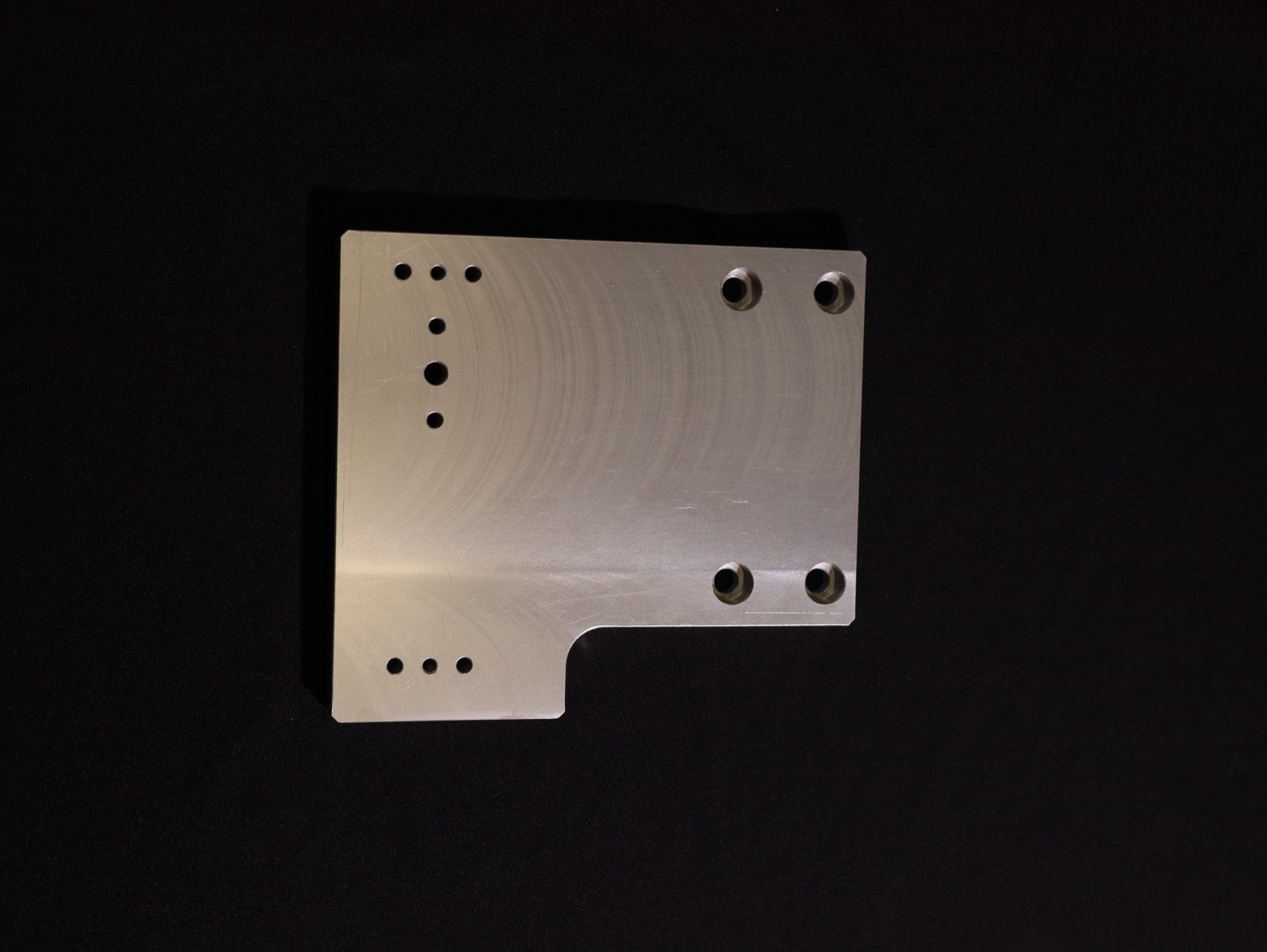
Above HRC 50 the rules change
Past roughly HRC 50, steel stops behaving like something you comfortably mill. The cutting edge wears fast, heat concentrates instead of dissipating, and the risk of distorting the part or wrecking the tool climbs sharply. This is not a skills problem. It is material physics, and it means a hardened part cannot be approached the way a soft one is.
So the useful question is never whether it can be done. It is which route gets you there, and there are four.
The four real routes
- Machine soft, then harden. Fast for the bulk of the part, but heat treatment moves the material, so it cannot carry your final critical dimensions.
- Hard milling. Coated carbide tooling can cut at high hardness, within real limits on geometry and at a real cost in tool life.
- Wire or sinker EDM. The route for what is hard and what is critical, because it does not depend on hardness and puts no force into the part.
- Grinding. Final finishing and the tightest tolerances on an already hardened surface.
Almost no part uses only one. Combining them well is what produces a good result. Combining them in the wrong order is where the money disappears, and that order gets decided earlier than most people realize.
Hardness is not the problem. Sequence is.
This is the part that matters. The real cost of a hardened part is almost never in the difficulty of cutting hard material. It is in the order of operations. Hardening first and then trying to correct two tenths of distortion with an end mill is precisely where projects stall and budgets break, and by then the decision that caused it is weeks behind you.
The strategy has to be set before the part goes into the furnace: what gets machined soft, how much stock stays on the critical dimensions, and what finishes those dimensions afterward, which is almost always wire EDM or grinding. Planned that way from the beginning, hardness stops being a crisis and goes back to being a number in the material note.
Why one roof matters more here than anywhere else
A hardened part that travels between three suppliers, one to machine, one to treat, one to grind, accumulates dead time at every handoff and a fresh chance to lose its datums at every setup. Keeping machining, heat treatment and finishing in the same plant lets the whole sequence be planned as one job, referenced from the same datums from bar stock through final inspection. On a soft part that is a convenience. On a hardened one it is often the difference between a part that holds print and one that does not.
Can hardened steel be machined?
Yes, but not by any process. Above HRC 50, critical features are best handled by EDM or grinding, with hard milling in coated carbide viable for certain geometries. Conventional milling is no longer the route.
Should I machine before or after hardening?
Ideally both. Machine the bulk soft, leave stock on the critical dimensions, harden, then finish those dimensions with EDM or grinding. That compensates for the distortion heat treatment introduces.
How much does a part distort during hardening?
It depends on material, geometry and process, but there is always some movement. That is exactly why tight tolerances are left for after treatment rather than before it.
How hard can you work?
We work hardened material to around HRC 65, including tool steels such as D2 and H13, using wire EDM and grinding.